Customer Reviews
About & Origin
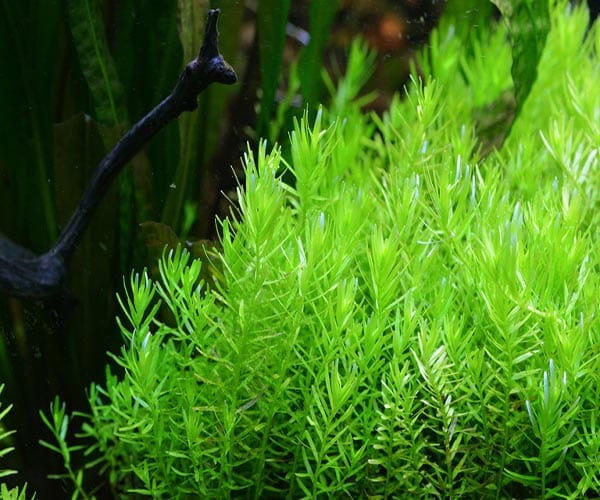
Rotala Green Mint is an aquarium stem plant, the green-leaved form of Rotala rotundifolia, one of the most widely grown stem plants in the aquarium hobby. The wider Rotala genus is native to wetlands, rice paddies and shallow standing water across South and Southeast Asia, and rotundifolia in particular has been in aquarium cultivation for decades — its red-leaved form is a classic aquascaping plant, and this green cultivar offers the same easy-going growth habit in a fresh, bright green instead.
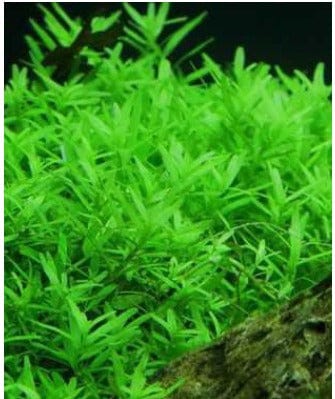
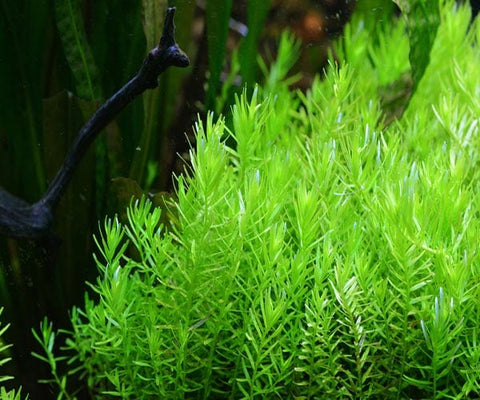
It grows as an upright stem with small, narrow leaves in whorls, forming a soft, bushy mass when planted in groups and trimmed regularly. Its colour and growth form respond directly to lighting — brighter light produces denser, more compact growth, while lower light lets it stretch taller with more space between leaves.
Because Rotala rotundifolia has been in cultivation for so long, it's one of the best-documented and most predictable stem plants in the hobby — there's very little guesswork involved in growing it successfully compared with rarer or newer cultivars. In an aquascape, this green form is typically used the way a gardener would use a mid-toned hedge: as a bushy backdrop that makes other, more colourful or unusually shaped plants stand out in front of it, rather than as the visual centrepiece itself. Groups are usually planted in a gently curved line or block through the midground or background, taking advantage of how evenly and densely it fills in once trimmed a few times.
Unlike the red form of the same species, this green cultivar doesn't rely on strong light or heavy iron dosing to look its best — its colour stays a consistent bright green across a wide range of light levels, which makes it a more predictable, lower-maintenance choice for anyone who wants dense stem-plant texture without chasing a specific colour outcome.
Requirements
One of the more forgiving Rotala varieties, which is part of why it's such a common recommendation for planted-tank beginners moving beyond the very easiest species.
Light: does reasonably well under moderate light, but strong light plus CO2 pushes it into low, dense, compact growth — good for a fuller midground/foreground look rather than a tall, sparse one.
Substrate: benefits from a nutrient-rich substrate but isn't dependent on one, especially if you dose a comprehensive liquid fertilizer regularly.
Growth rate: a fast grower that needs fairly regular trimming to stay tidy rather than sprawling — expect to prune every couple of weeks in a well-lit tank.
Propagation: simple stem cuttings — cut a healthy top section and replant it directly into the substrate, where it roots readily. A single starter bunch can multiply into a full row within a few trimming cycles, since almost every cutting taken can be replanted rather than discarded.
Nutrients: a fast grower is also a hungry one — regular dosing of a general planted-tank fertilizer (nitrogen, potassium, and trace elements) keeps growth dense and colour bright rather than pale and stretched.
Space to trim: because it grows quickly, plan for a maintenance routine rather than a "set and forget" placement — a Rotala group left untrimmed for too long will overshadow slower neighbouring plants.
Water changes: a regular partial water-change routine helps replenish trace nutrients between fertilizer doses and keeps this fast-growing plant supplied with what it needs to sustain its growth rate.
Group planting: looks best planted in a group of at least 6–10 stems rather than singly — a lone stem reads as a thin, insignificant sprig, while a proper group fills in as the dense, bushy hedge effect this plant is chosen for.
Compatibility
Water & Care Conditions
Tolerant of a fairly wide range of aquarium conditions:
- pH: 6.0–7.5
- Water hardness: adaptable, general community-tank hardness is fine
- Temperature: 20–28°C (68–82°F)
- Light: moderate to high — higher light with CO2 gives the tightest, most compact growth; lower light still works but the plant grows taller and less dense
- CO2: not required, but a clear driver of denser, more compact growth when supplied
- Water flow: tolerant of most flow levels, from gentle to moderately strong circulation
Grows well without CO2 injection, though CO2 and regular fertilizing noticeably speed up growth and improve density. Its main practical failure mode is neglect rather than a specific water-chemistry issue — a group that's gone too long without trimming or fertilizing will simply stretch out, thin, and pale rather than dying outright, and it responds quickly (often within a couple of weeks) once trimming and dosing resume. This forgiving recovery behaviour is a large part of why it's such a common recommendation for people building their first proper stem-plant collection.
Oxygenation: as a fast photosynthesiser, a healthy, well-lit group can visibly pearl (release strings of tiny oxygen bubbles from the leaves) during peak light hours in a well-balanced tank — a good, simple visual sign that light, CO2, and nutrient dosing are all reasonably in sync, even for keepers not running a dedicated CO2 system.
Because it tolerates such a wide span of hardness and pH, it's a genuinely safe choice across most tap-water conditions without needing to adjust water chemistry specifically for this one plant — a real practical advantage for keepers stocking a mixed planted community tank who don't want to chase multiple different water-chemistry targets for different species at once, which is exactly the kind of low-friction reliability that has kept it a staple recommendation for so long.