About & Origin
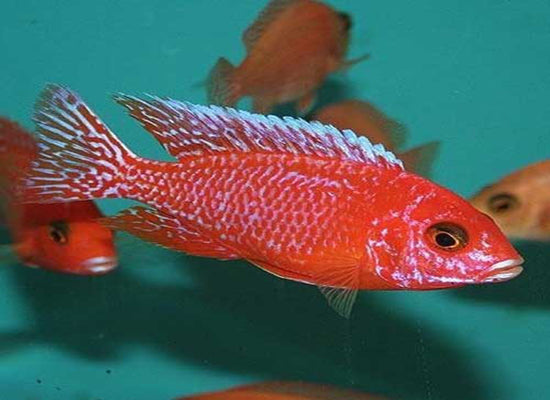
Strawberry Cichlid is a Malawi peacock cichlid colour strain that sits at the pink end of the Aulonocara sp. colour spectrum — a softer, pinker tone than the deeper red of Red Peacock or the orange of Marf lines, which makes it one of the more distinctive single-colour peacock strains at a glance.
Aulonocara in the wild forage across sand and intermediate rock/sand zones along Lake Malawi's shoreline, sensing invertebrates buried in the substrate with a pore-covered snout — worth keeping in mind when planning décor, since covering the whole floor in rock removes their natural foraging ground.
Colour is male-only and maturity-linked across the whole peacock group: females and juveniles stay silvery-grey, and a young Strawberry Cichlid needs months of growth before the pink-red fully sets in.
Aulonocara peacocks are maternal mouthbrooders: after spawning, the female collects the fertilised eggs in her mouth and carries them — without eating — for roughly three to four weeks until the fry are large enough to swim and feed independently. In a mixed-sex group this happens readily without any special intervention, and holding females can be left in the main tank or moved to a breeding trap if you want to maximise fry survival, since other tankmates will happily eat any fry that wander off unsupervised.
When choosing individuals, look for a fish with clear eyes, an even, undamaged fin edge, and — in males — colour that's already showing rather than a washed-out juvenile pattern, since colour intensity in adulthood is difficult to predict from a very young fish. Peacocks are also prone to the same Malawi bloat and internal parasite issues as other rift lake cichlids if kept on a high-protein or poor-quality diet, so a stable, appropriate diet from the start matters more for long-term health than tank decor.
Requirements
Standard Malawi peacock requirements apply: 200+ litres (55+ gallons) for a small group with one male, semi-aggressive but calmer than mbuna, African cichlid pellets plus frozen brine or mysis shrimp, rockwork broken into distinct territories with open sand left for foraging, and slow drip acclimation for new arrivals.
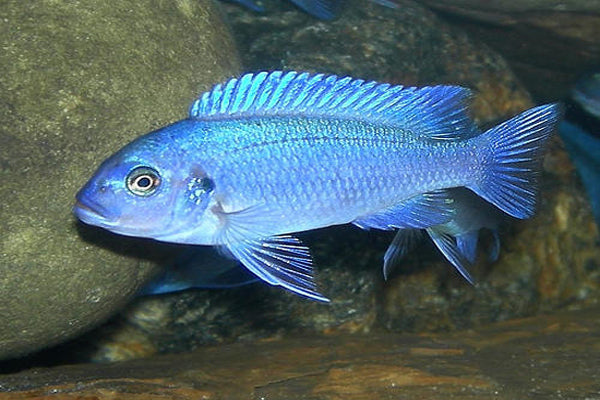
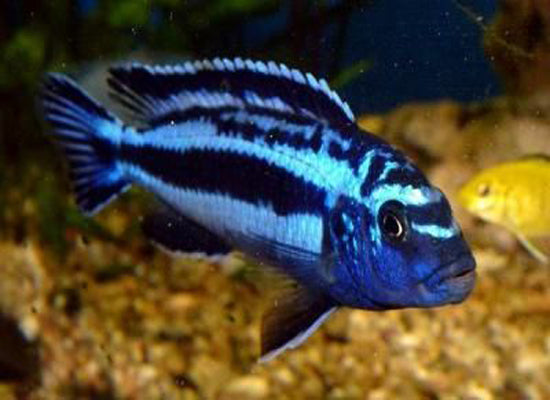
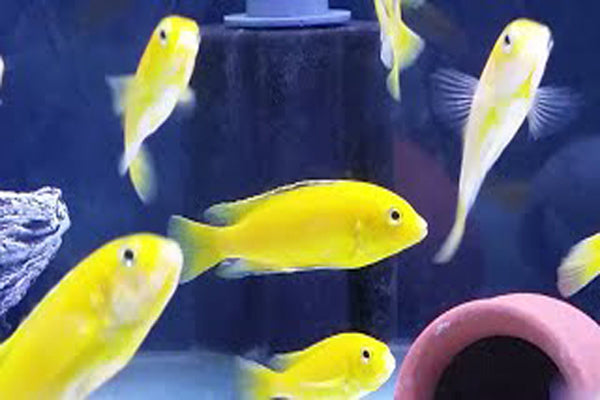
Stocking this strain specifically: the pink-red tone is close enough to Red Peacock's deeper red that the two can read as similar at a glance to a territorial male — avoid keeping them together in a smaller tank, and prefer visually distinct strains (like a yellow or blue-dominant peacock) as tankmates if space is limited.
Sexing: males show the full pink-red once mature; females and juveniles stay silvery-grey.
Feeding for colour: alongside a good-quality African cichlid pellet, working in foods with natural carotenoid content — spirulina flake, colour-enhancing pellets, or occasional shrimp-based frozen food — genuinely helps a pink/red strain like this one hold its saturation over the long term, in much the same way carotenoids support colour in red-toned fish more broadly. Skip generic goldfish or feeder flake as a staple, since it lacks the protein balance Malawi cichlids need and offers little toward colour development.
Group dynamics: a single dominant male will usually outcolour and outcompete subordinate males of the same strain for females and territory, so if keeping more than one male, provide enough rockwork and floor space for each to establish a separate territory out of constant sightline of the other — crowding two males into a small footprint reliably produces one stressed, washed-out loser rather than two thriving fish.
Compatibility
Water & Care Conditions
- pH: 7.8–8.6, hard and alkaline like the rest of the peacock range
- Water hardness: 10–20 dGH (200–350 ppm)
- Temperature: 24–28°C (75–82°F)
- Water changes: 25–30% weekly with strong filtration
A pink-red that's shifting toward pale or orange-tinged is worth checking against water quality on this strain, since the colour is meant to read as a clean, even pink rather than a mixed tone.
New arrivals can take several weeks to settle and show full colour; a persistently dull or clamped-fin fish beyond that window is worth investigating. Keep ammonia and nitrite at zero once cycled — most unexplained losses trace to filtration or stocking, not fragility.
Water source considerations: tap water in many regions runs on the soft, neutral-to-slightly-acidic side, which sits below this strain's needs — a remineralizing buffer, crushed coral in the filter, or a dedicated Rift Lake salt mix are all common, low-effort ways to reliably hit and hold the hard, alkaline range this fish needs rather than relying on tap water alone and hoping it's close enough.
Test kits for pH and general/carbonate hardness are worth the small investment for this species specifically — Malawi cichlids kept persistently outside their preferred range don't usually die outright from it, but show up as chronically faded colour, reduced appetite, and lowered resistance to the bloat and parasite issues the group is prone to.