Customer Reviews
About & Origin
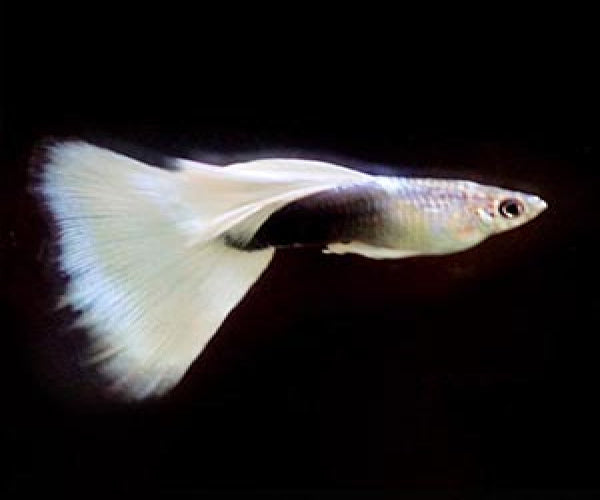
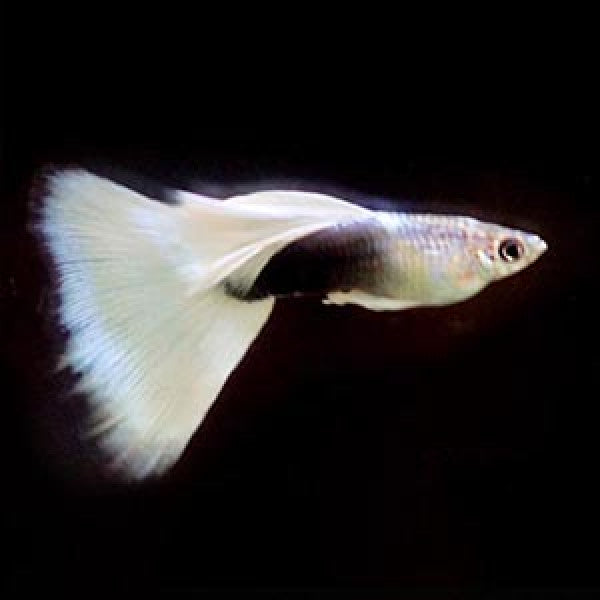
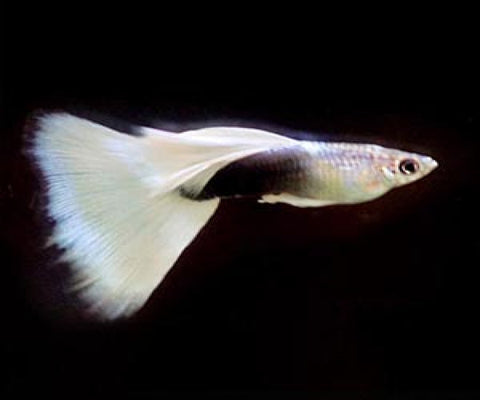
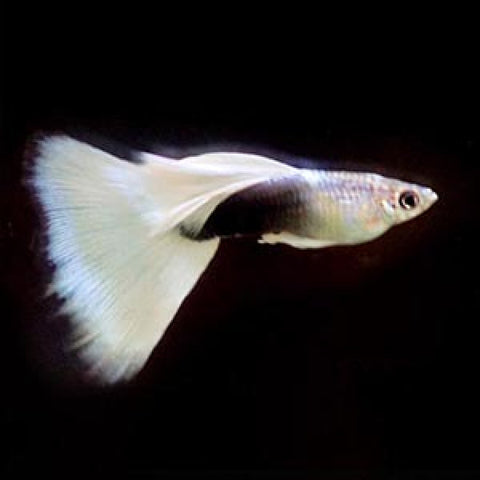
The Tuxedo White Guppy is a fancy guppy strain (Poecilia reticulata) with a pale, near-white front half and a darker "tuxedo" band toward the rear — the same two-tone patterning family as tuxedo guppies in other colors. Wild guppies originate from streams, ponds, and coastal waters across Venezuela, Trinidad, Guyana, and northern Brazil.
In the wild, guppies live in shallow, warm, often nutrient-rich water and are famous among biologists for how fast they adapt to local conditions — including to predators, which has made them one of the most studied fish in evolutionary biology. In the aquarium hobby, that same adaptability is exactly what makes guppies such a reliable beginner fish.
The "tuxedo" pattern gene is one of the most widely used base patterns in guppy breeding precisely because it's easy to combine with almost any fin color: it darkens roughly the rear third to half of the body in a fairly consistent band, similar in placement to a half-black pattern but generally read as a distinct, slightly different genetic marker by breeders, and it shows up reliably across generations. Paired with a white/pale front half here rather than a stronger body color, the tuxedo band reads as a cleaner, higher-contrast marking than it would against a darker or more colorful body — which is part of why white-bodied tuxedo strains are a popular, classic combination rather than a rare or unusual one.
The Tuxedo White Guppy strain sold here is bred and raised for the aquarium trade specifically for its coloring and finnage; its care, temperament, and water needs are identical to any other guppy variety.
fishykart.com ships healthy, actively-colored stock, not fish pulled straight from a wholesale feeder tank.
Requirements
Standard guppy husbandry applies (10 gallon/38 litre minimum for a group of 6+, roughly 2 litres per adult, female-heavy sex ratio, omnivorous flake/micro-pellet diet with occasional live/frozen foods, floating or fine-leaved plants for fry cover, a tight lid since they jump, fry every 4-6 weeks once mature).
This strain specifically: the pale front half is genuinely useful as an early-warning colour for water problems — ammonia stress, poor conditions, or minor injuries show up as visible red streaking, cloudiness, or pinkish patches on pale skin far more readily than they would on a darker strain, making this one of the easier guppy varieties to health-check at a glance. That's a genuine practical upside, not just cosmetic.
Breeding this pattern: the tuxedo marking is genetically dominant and passes reliably to a large share of offspring when both parents carry it, though fry born to a tuxedo × non-tuxedo pairing will show a mix of patterned and plain young — worth knowing if you're hoping to keep the tuxedo trait consistent across generations rather than pairing this strain with an unrelated colour line at random.
Tank decor: because the pale body shows up so clearly against darker backgrounds, a dark substrate and backdrop genuinely make this strain look its best visually, in addition to the practical health-monitoring benefit — a stark white-on-black contrast is part of why this pattern combination remains popular with guppy keepers specifically for display tanks.
Compatibility

Water & Care Conditions
- pH: 6.8–7.8
- Salinity / hardness: freshwater, moderately hard (10–20 dGH)
- Temperature: 24–28°C (75–82°F)
- Oxygenation: moderate surface movement, avoid stagnant water
Stability matters more than an exact number. Check the pale front half regularly — reddish streaking, cloudy patches, or ragged fin edges show up early and clearly here compared to darker strains.
Weekly 20-25% water changes keep colour and finnage healthy and reduce fin rot/ich risk; acclimate new arrivals slowly (20-30 minute drip) rather than a quick release.
Captive-bred and generally adaptable to ordinary dechlorinated tap water once roughly in range. Well-kept guppies typically live 2-3 years.
Diet and colour maintenance: a varied diet including some colour-supporting foods (spirulina flake, small live or frozen foods like daphnia or brine shrimp) helps keep the tuxedo band's contrast crisp rather than fading toward a muddier grey over time — nutrition genuinely affects how sharp the pattern reads, not just overall health.
Water hardness note: guppies as a species do noticeably better in moderately hard, slightly alkaline water than in very soft, acidic conditions — if local tap water runs soft, a small remineralizing addition or a pinch of aquarium salt helps replicate the mineral-rich water this species naturally thrives in, and often shows up as improved colour and finnage condition within a few weeks.