About & Origin
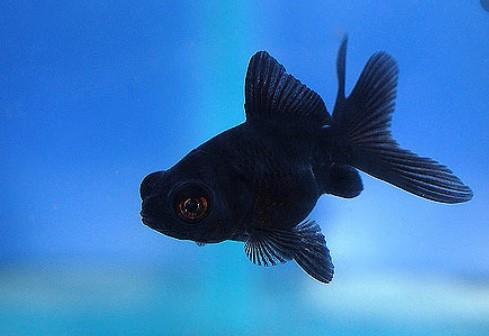
The Black Moose guppy is a solid-black colour strain of the common guppy, Poecilia reticulata — almost certainly the same variety more widely known in the international hobby as the "Black Moscow" guppy, one of the deepest, most uniformly jet-black strains ever bred from the species (the pre-existing product description on this listing, "Black Gold," appears to be leftover fragment text rather than a real description). Wild guppies originate from streams, ponds, and coastal waters across Venezuela, Trinidad, and neighbouring parts of northern South America, where they are famous for their explosive, near-constant breeding and their tolerance of a very wide range of water conditions — traits that carried straight through into every ornamental strain descended from them, this one included.
Unlike most guppy strains, which are prized for bright, contrasting colour and elaborate tail patterns, the appeal of the Black Moose/Moscow line is exactly the opposite: a dense, velvety, almost light-absorbing black that covers the body and fins with little to no other pigment showing through, achieved through generations of selective breeding for solid melanin coverage rather than pattern. Males carry the colour into a flowing, fan-shaped caudal fin that can look almost metallic under good lighting, while females are a plainer, rounder-bodied black or dark grey — the usual guppy pattern of showy, ornamented males and understated, larger females holds here just as it does in every other guppy strain.
Like all guppies, Black Moose are lively, constantly active swimmers that spend most of their time in the upper and middle water column rather than hiding, making them a visible, engaging presence in a community tank. They do best kept in a small group rather than as a single fish, both for their own social comfort and because a solitary guppy tends to be a duller, more skittish version of the same fish.
Requirements
Guppies are among the most forgiving community fish in the hobby, and the Black Moose strain is no exception — but a handful of real requirements matter for keeping both the colour and the fish itself looking their best over the long run.
Tank size: a group of five to six guppies is comfortable in a 40-litre (roughly 10-gallon) tank and up; guppies are shoaling fish by temperament and settle in better, show better colour, and behave more naturally in a small group than kept alone. More space and a heavier planting also help buffer the water chemistry swings a smaller volume is prone to.
Sex ratio: males will pester a single female relentlessly with near-constant courtship behaviour, which is genuinely stressful for her over time. Keeping two or more females per male — or, if breeding isn't the goal, an all-male or all-female group — keeps stress down and avoids exhausting, unrelenting breeding pressure.
Diet: omnivorous and easy to feed — a good-quality flake or small pellet as a daily staple, with occasional live or frozen foods (brine shrimp, daphnia, small bloodworm) both to round out the diet and to support colour saturation and breeding condition.
Breeding: guppies are livebearers and will breed readily in an ordinary community tank without any special intervention at all — a small starting group can multiply into a self-sustaining population within a few months. Floating plants or dense fine-leaved plants give newborn fry somewhere to hide from adult fish, which will otherwise treat them as a snack.
Jumping: guppies are capable, sometimes surprising jumpers, especially when startled by sudden movement or a lid being removed — a tight-fitting lid or a water level kept a couple of centimetres below the tank's rim is a cheap, sensible precaution against losing fish this way.
Compatibility
Water & Care Conditions
Guppies tolerate a genuinely wide range of conditions, which is part of why the species has spread and adapted so successfully wherever it's been introduced — but the Black Moose/Moscow strain looks and breeds best, and holds its deep colour most consistently, within these ranges:
- pH: 6.8–7.8 — guppies actually do noticeably better in neutral-to-slightly-hard, slightly alkaline water than in very soft, acidic water, which is the opposite preference from many popular soft-water tropical fish
- Hardness: moderate to moderately hard, roughly 8–20 dGH; a small amount of mineral hardness genuinely benefits guppies rather than being merely tolerated
- Temperature: 22–28°C (72–82°F); the strain is comfortable through most community-tank ranges, though it shouldn't be kept permanently unheated in a cool room, since guppies are still a tropical species at heart
- Oxygenation: standard community-tank filtration and surface movement is sufficient — no special aeration or extra circulation is needed for this species
Stable, mature water matters more to guppies than any single parameter being exactly "perfect" — sudden swings in hardness, pH, or temperature are far more likely to cause visible stress, faded colour, or illness than water that is simply a little outside the ideal range but consistent day to day. Regular partial water changes on a predictable schedule, rather than infrequent large ones, are the best way to keep both the water and the fish's colour stable over time.
A weekly partial water change of around 20–25% is a reasonable routine for a healthily stocked guppy tank, adjusted upward if the group is breeding heavily and the population is growing, since more fish means more waste to manage. Test strips or a liquid test kit for ammonia, nitrite, and nitrate are worth using periodically, especially in a newer or heavily stocked tank, so problems can be caught and corrected before they show up as stress or colour loss in the fish themselves.