About & Origin
The widow tetra is a colour-enhanced strain of the black widow tetra, also called the black skirt tetra (Gymnocorymbus ternetzi), a small characin native to the slow-moving rivers and floodplain pools of the Paraguay–Paraná river basin in South America (Brazil, Bolivia, Paraguay, Argentina). The wild fish is silvery-grey with a bold black "skirt" trailing from its rear half, which is where both common names come from.
The vivid colour on this fish is produced the same way as colour-enhanced zebra danios: either through the GloFish genetic-modification programme, which gives a permanent, breed-true fluorescent hue, or -- less desirably, and not what fishykart.com stocks -- through dye injection of a plain black widow tetra, which fades and is stressful to the fish. Underneath the colour it is a completely standard, easy-going widow tetra: a deep-bodied, fast, active shoaling characin.
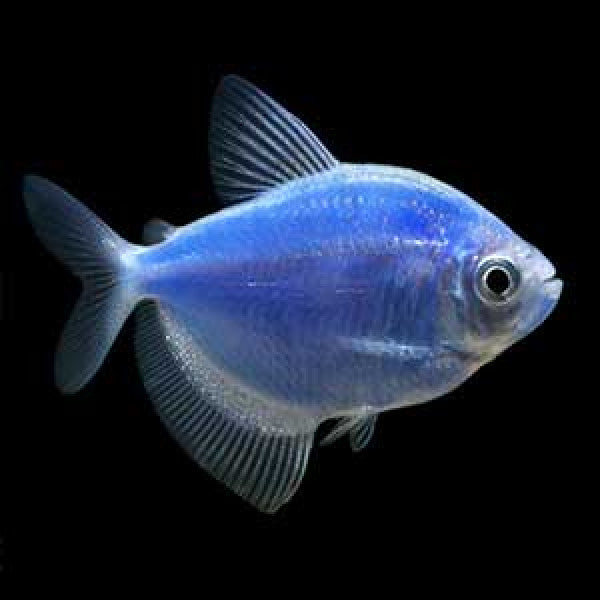
Body shape is a good identifying feature: widow tetras are noticeably taller and more diamond-shaped than most other tetras, with a high, laterally compressed profile and a long, flowing dorsal and anal fin that trail behind the body as the fish swims -- giving the "skirt" effect the black-bodied wild form is named for. In the wild they shoal in loose groups over sandy or leaf-littered bottoms in warm, slow, tannin-stained floodplain water, feeding on small insects, worms, crustaceans, and plant matter that washes in with the seasonal flooding.
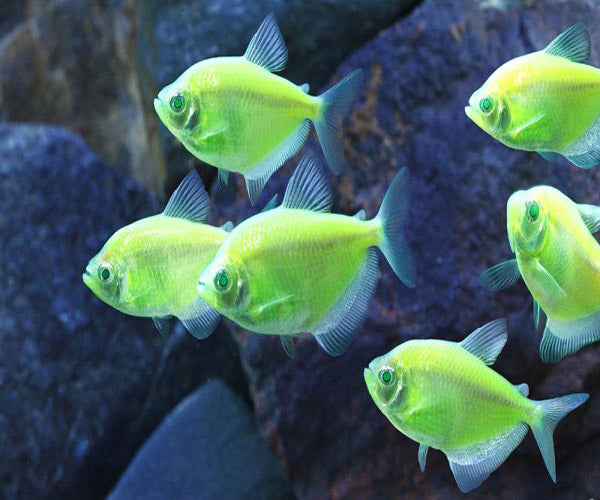
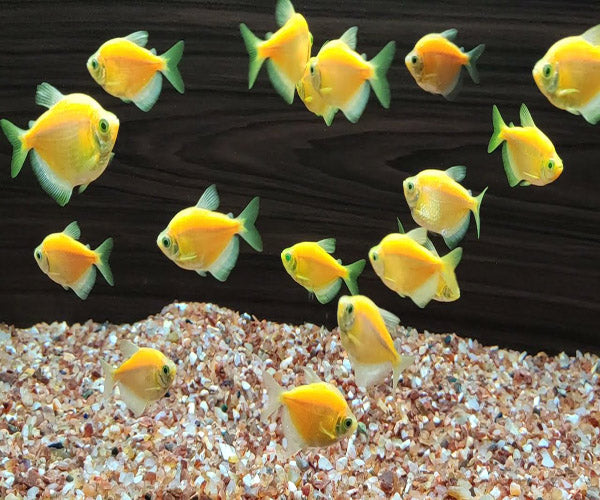
Juveniles are noticeably paler and take a few weeks of good feeding and stable conditions to reach their full adult colour intensity. As with most colour-strain fish, individual vibrancy varies a little fish to fish, and colour tends to deepen further with age and a varied, high-quality diet. Adults typically reach around 4.5-5.5cm (1.75-2.25in) at full size, making them one of the larger commonly-kept tetras alongside their close relatives.
Requirements
Same easygoing widow tetra behaviour under the blue colouring: keep a shoal of 6 or more in a 60cm-plus tank with some planted cover, feed a standard flake or micro-pellet diet with the occasional live/frozen treat, and expect fin-nipping toward slower, long-finned tankmates to fade once the group is properly sized -- a thin shoal is the usual cause when it happens.
Like other widow tetra strains this is an unfussy egg-scatterer: adults spawn readily in a well-planted community setup but don't guard eggs or fry, and will eat both without separation. A dedicated breeding tank with fine-leaved plants or a spawning mop and dim lighting gets better fry survival if that's the goal.
One acclimation note specific to color-strain stock generally, blue included: drip-acclimate new arrivals over 20-30 minutes rather than a quick float-and-dump, since sudden parameter shifts stress selectively-bred colour fish more than the wild-type would suggest, and quarantine for a week or two before adding to an established community.
Fin safety: the trailing dorsal and anal fins are a genuine target for fin-nippers, so avoid pairing with known nippy species (some barbs, some other tetras) -- a properly sized shoal in a calm community tank rarely has this problem among its own kind.
Compatibility
Water & Care Conditions
Same native-water profile as the rest of the widow tetra group -- pH 6.0-7.5, hardness 4-18 dGH, 22-28°C, gentle-to-moderate flow -- since the blue colouring changes nothing about what the fish itself needs.
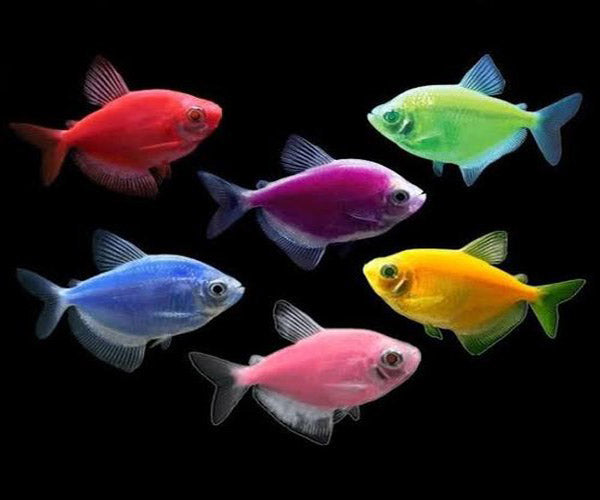
Where blue does differ slightly is under lighting: this strain tends to read most vivid under a cooler, blue-leaning light spectrum (the kind planted-tank LEDs often shift toward at higher Kelvin settings) rather than the warm, diffused light that flatters the red/yellow/purple strains best -- worth keeping in mind if you're deliberately choosing tank lighting to show the colour off. Direct, overly bright light still washes it out the same as any strain.
Nitrate build-up dulls this colour strain the same way it does the others, so weekly partial water changes (~20-25%) matter more for keeping the blue looking sharp than the numbers on a test kit alone would suggest.
A properly cycled filter and stable temperature matter more than chasing an exact pH figure -- this species tolerates a fairly wide range as long as it's consistent, and sudden swings cause more visible stress (clamped fins, pale colour, reduced appetite) than the fish would show from simply sitting slightly outside the ideal range for an extended period of time.