
About & Origin
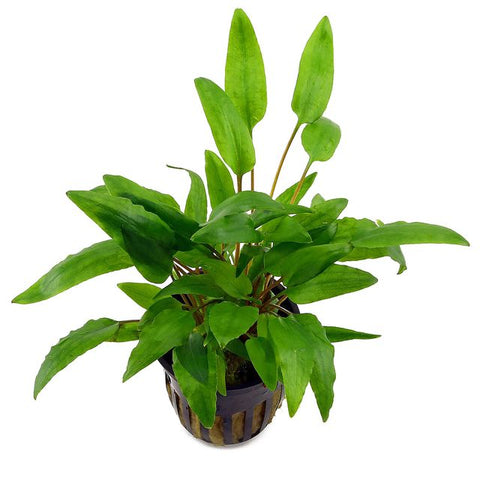
Cryptocoryne parva is a small aquarium plant — the smallest known species in the Cryptocoryne genus — native to the streams and rainforest waterways of Sri Lanka. In the wild, like other crypts, it grows along riverbanks and in slow-moving water, tolerating both submersed and emersed conditions.
True to its name (parva meaning "small"), it forms a low, dense rosette of narrow, lance-shaped leaves rarely more than a few centimetres tall, making it one of the few true dwarf carpeting-style plants in the crypt family. Unlike many other Cryptocoryne species, its leaf colour and shape stay fairly consistent even as water conditions change, which makes it a bit more predictable to grow than some of its relatives.
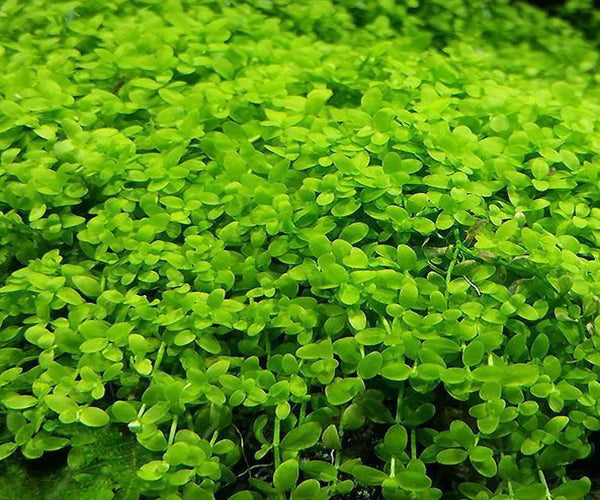
It spreads slowly via runners, gradually forming a low, grass-like mat rather than growing tall — a look aquascapers often use for foreground carpeting in smaller or nano tanks.
The genus Cryptocoryne as a whole takes its name from the Greek for "hidden seed," a reference to the way the flower's reproductive structures are enclosed within a hooded spathe rather than displayed openly like most flowering plants — an adaptation shared with its aroid relatives such as Anubias. Sri Lanka is a genuine hotspot for the genus, hosting a striking number of endemic Cryptocoryne species found nowhere else, each often restricted to a single river system, which has made wild Cryptocoryne populations a point of real conservation interest among botanists as well as aquarists.
Compared to faster-spreading dwarf carpet plants like Monte Carlo or dwarf hairgrass, parva takes noticeably longer to fill in a given area, but it rewards that patience with a naturally tidy, low-maintenance mat that rarely needs the aggressive trimming those faster carpets demand.
Requirements
Cryptocoryne parva is easy to keep long-term, but is a genuinely slow grower — patience matters more than technique here.
Light: needs a bit more light than most other crypts to grow well and stay compact — moderate lighting is recommended rather than the low light some larger Cryptocoryne species tolerate.
Substrate: like other crypts it's a root feeder and appreciates a nutrient-rich substrate, though it will also grow (more slowly) in plain gravel with root tabs.
CO2: not required, though it speeds up the otherwise slow growth rate.
Settling in: Cryptocoryne species are known for "crypt melt" — losing most of their leaves after being moved or when water conditions change significantly. This is usually not fatal; new, adapted leaves typically regrow from the rhizome within a few weeks, so don't panic and pull the plant if this happens after planting.
Placement: foreground carpeting in small groups, ideally left undisturbed once established since it dislikes being uprooted repeatedly.
Spacing when planting: individual crowns are best planted a couple of centimetres apart in small clusters rather than as single scattered plants, since the runners need something nearby to spread toward and a cluster fills in as a mat much faster than isolated specimens ever will on their own.
Realistic timeline: a proper dense carpet from a handful of starter plants can genuinely take several months to a year to fill in, which is worth setting expectations around before comparing it unfavourably to faster carpeting plants — it's simply not built for a quick aquascaping turnaround.
Acclimatisation: because it's so sensitive to being disturbed, it's worth taking a little extra time drip-acclimating this plant to a new tank's water chemistry rather than a quick dunk-and-plant approach, which can reduce the severity of any melt after introduction.
Compatibility
Water & Care Conditions
Cryptocoryne parva is tolerant of a range of established, stable water conditions, doing best within:
- pH: 6.0–7.5
- Hardness: soft to moderately hard water, roughly 3–15 dGH
- Light: moderate — a bit brighter than most other Cryptocoryne species prefer
- Temperature: 22–28°C (72–82°F)
- Water stability: prefers stable, well-established conditions; sudden swings in parameters are the most common trigger for melt
Outside these ranges, or after a sudden change in water chemistry, expect possible melt followed by slow regrowth — this is normal for the genus and not usually a sign the plant has died.
Because it's genuinely one of the smallest crypts available, Cryptocoryne parva also tolerates low-tech, non-CO2 setups better than many faster-growing foreground plants -- it simply grows slowly rather than failing outright, making it a forgiving choice for a low-maintenance planted tank. Root tabs or a nutrient-rich substrate support steady growth over time, though it's far less demanding on dosing than fast-growing stem plants sharing the same tank. Trim by removing individual older leaves near the base rather than shearing the whole plant, since new growth emerges from the crown rather than along a stem, unlike the fast-growing stem plants many keepers pair it with in the same tank.