About & Origin
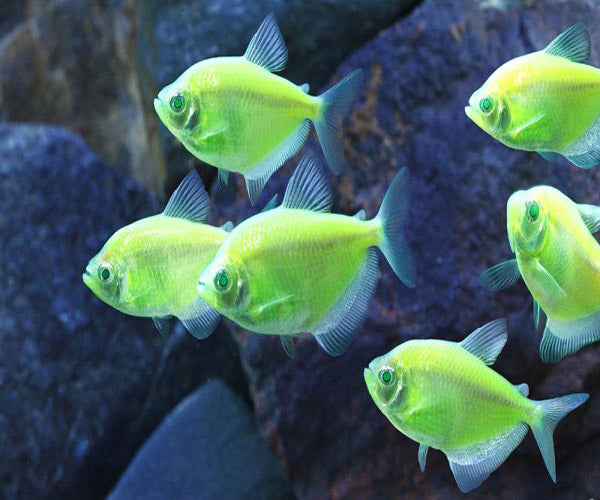
The widow tetra is a colour-enhanced strain of the black widow tetra, also called the black skirt tetra (Gymnocorymbus ternetzi), a small characin native to the slow-moving rivers and floodplain pools of the Paraguay–Paraná river basin in South America (Brazil, Bolivia, Paraguay, Argentina). The wild fish is silvery-grey with a bold black "skirt" trailing from its rear half, which is where both common names come from.
The vivid green colour on this fish is produced the same way as colour-enhanced zebra danios: either through the GloFish genetic-modification programme, which gives a permanent, breed-true fluorescent hue, or -- less desirably, and not what fishykart.com stocks -- through dye injection of a plain black widow tetra, which fades and is stressful to the fish. Underneath the colour it is a completely standard, easy-going widow tetra: a deep-bodied, fast, active shoaling characin.
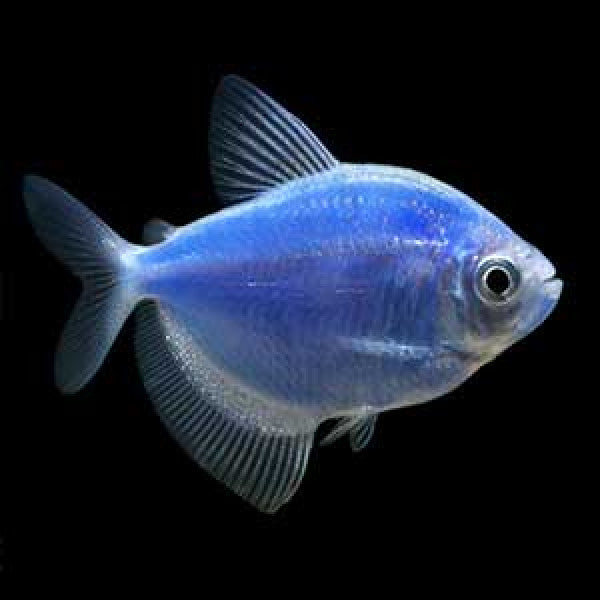
Body shape is a good identifying feature: widow tetras are noticeably taller and more diamond-shaped than most other tetras, with a high, laterally compressed profile and a long, flowing dorsal and anal fin that trail behind the body as the fish swims -- giving the "skirt" effect the black-bodied wild form is named for. In the wild they shoal in loose groups over sandy or leaf-littered bottoms in warm, slow, tannin-stained floodplain water, feeding on small insects, worms, crustaceans, and plant matter that washes in with the seasonal flooding.
Juveniles show only a faint hint of green and take a few weeks of good feeding and stable conditions to reach their full adult colour intensity. As with most colour-strain fish, individual vibrancy varies a little fish to fish, and the green tone tends to deepen further with age and a varied, high-quality diet. Adults typically reach around 4.5-5.5cm (1.75-2.25in) at full size, making them one of the larger commonly-kept tetras alongside their close relatives.
Requirements
Widow tetras are a hardy, adaptable community fish with straightforward needs.
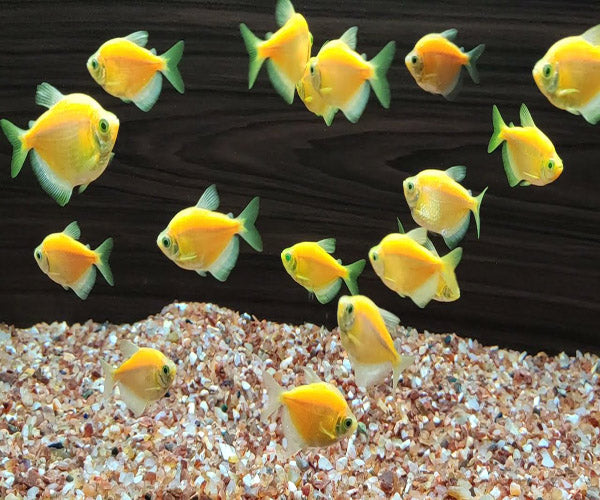
Group size: like almost all tetras, they are shoaling fish and should be kept in groups of 6 or more -- a lone or thinly-grouped widow tetra becomes nippy toward long-finned tankmates (they have a mild reputation for fin-nipping, which a proper-sized shoal and enough swimming space largely prevents).
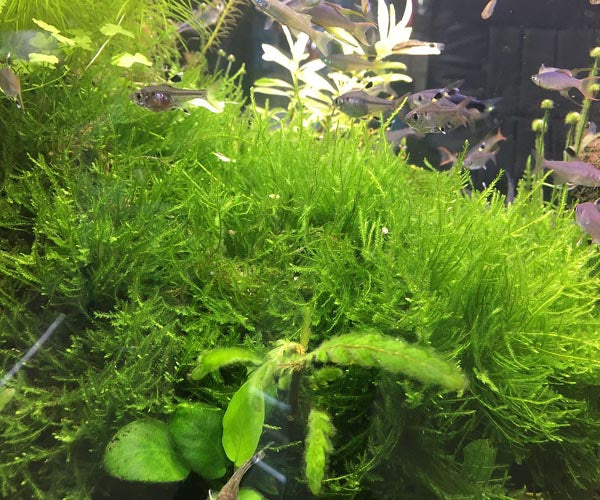
Tank size: a 60cm (24") tank comfortably houses a shoal; they use the middle of the water column and appreciate some open swimming space alongside planted areas to retreat into.
They are omnivorous and easy to feed -- a good flake or micro-pellet staple, supplemented with occasional live or frozen foods (brine shrimp, daphnia, bloodworm) for extra vigour and colour. They are egg-scatterers and will breed in a well-planted tank, though like most tetras the adults do not guard eggs or fry.
Breeding: if you want to raise fry rather than just let the shoal breed opportunistically, a dedicated spawning setup with fine-leaved plants (or a spawning mop) and dim lighting encourages egg-scattering; move adults out afterward, since widow tetras -- like most characins -- will eat their own eggs and newly hatched fry given the chance. Eggs hatch in roughly 24-36 hours, with fry free-swimming a few days later and needing infusoria or commercial fry food until large enough for baby brine shrimp.
Acclimation: new stock should be drip-acclimated over 20-30 minutes rather than dropped straight in, since sudden pH or temperature shifts stress this species more than its hardy reputation suggests. Quarantining new arrivals for 1-2 weeks before adding them to an established community tank is good practice to catch ich or other issues early. A tightly-cropped or bare tank makes this species noticeably more skittish and prone to fin-nipping; a mix of open swimming water and planted or driftwood cover to retreat into gives the calmest, most confident-looking shoal.
Compatibility
Water & Care Conditions
Widow tetras come from warm, soft, slightly acidic South American floodplain water, and do best given something close to those conditions:
- pH: 6.0–7.5
- Hardness: soft to moderately hard, roughly 4–18 dGH
- Temperature: 22–28°C (72–82°F)
- Oxygenation: comfortable with gentle to moderate water movement; avoid strong, fast current which doesn't reflect their natural slow-water habitat
- Lighting: moderate, ideally softened by floating plants or leaf litter -- brighter, harsher lighting tends to wash out the intensity of the green colour strain rather than showing it off
They're forgiving of minor swings once established, but consistent, cycled water gives the best colour, activity level, and lifespan. Because widow tetras are omnivorous mid-water shoalers with a relatively high metabolism for their size, they benefit from regular partial water changes (around 20-25% weekly) to keep nitrate low -- accumulated nitrate is one of the more common reasons a shoal's colour looks duller than it should over time, even when other parameters read fine on a test kit.
Like most South American blackwater-adapted characins, widow tetras tolerate a wider range than their "ideal" numbers suggest, but sudden swings are far more stressful than stable numbers at the edge of the range. Always match temperature and pH when doing water changes rather than just topping up with straight tap water, and let new water sit or be treated to remove chlorine/chloramine first, since chlorine is harmful to the gills of any fish regardless of scale type.
A well-cycled filter with gentle-to-moderate flow, combined with some floating or leafy planting to soften the light, tends to bring out the deepest, most saturated colour in this strain and gives the shoal somewhere to retreat when they feel exposed, which in turn keeps stress-related colour fading to a minimum.