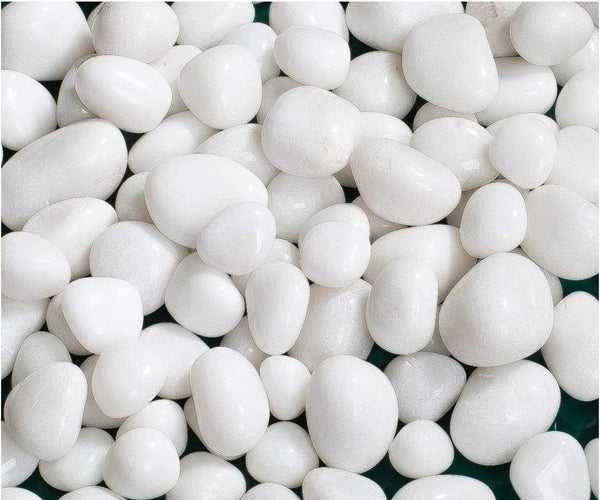
About This Product
White polished pebbles are small, tumbled, rounded decorative stones used as aquarium substrate or accent decor. Tumbling smooths away sharp edges and gives the stones a bright, glossy, uniform finish -- a popular choice for keepers who want a light, reflective substrate that brings out colour contrast in darker-bodied fish and makes a tank feel brighter and more open overall.
Like other polished decorative stones, these are chemically inert -- they don't buffer pH, add hardness, or otherwise interact with the water under normal aquarium conditions, unlike substrates made from limestone or coral sand, which can raise pH and hardness over time. That makes white polished pebbles a predictable, purely cosmetic choice that won't shift a tank's chemistry away from what's needed for a given species.
They work well as a full bright substrate for a nano tank or bowl, as a light-coloured accent band against a darker substrate, or scattered around the base of driftwood and plants in an aquascape.
A light substrate also has a practical side benefit some keepers value: it reflects more of the tank's light back upward and outward than a dark substrate absorbs, which can make a modestly-lit tank feel brighter overall without adding a stronger light fixture.
White decorative stone is usually a hard quartz, granite, or similar silicate rock rather than limestone, marble, or coral-derived material -- an important distinction, since calcium-carbonate-based white stone (true marble chips or crushed coral) actively dissolves slowly in slightly acidic water and raises pH/hardness over time, which would be a problem in a soft-water planted tank. A polished, tumbled white pebble sold as inert aquarium decor is selected specifically for NOT having that reactive mineral content, which is why it's marketed as safe for general freshwater use rather than being restricted to hard-water/African cichlid setups the way crushed coral typically is.
Size grading is usually similar to other "pebble" products in the same line, commonly in the roughly 1-2cm range, which keeps the finished bed even and avoids the debris-trapping gaps that come from mixing very fine and very coarse material together.
Requirements
No power or special setup is required -- this is a fully passive decor item. Rinse thoroughly in plain water before adding to a tank; white stone in particular tends to show any residual dust clearly as cloudiness in the water if it isn't rinsed until the runoff is clear.
Because white substrate shows waste and debris more visibly than dark substrate, tanks using it as a full bed benefit from slightly more frequent gravel-vacuuming to keep the bright look actually looking clean. As with any inert substrate, it offers no nutrient value to root-feeding plants, so nutrient tabs or a rich layer underneath would be needed to support anything beyond low-demand species.
A depth of roughly 3-5cm suits a full substrate layer; a thinner scatter is enough for accent use around hardscape.
Being inert, it needs no capping layer or special preparation beyond the initial thorough rinse, and can be used as the sole substrate in a simple, fish-focused tank without any further treatment.
As a rough quantity guide, a standard-depth (~5cm) gravel-style substrate needs approximately 1-1.5kg per litre of tank volume, adjusted for the tank's footprint -- a shallow, long tank needs proportionally more than a tall, narrow one holding the same water volume. It's worth buying slightly more than the bare minimum, since colour consistency between separately purchased batches can vary a little and having to blend a top-up batch is more noticeable on white stone than on darker colours.
If layering over a nutrient-rich planted substrate, white pebbles work as a bright decorative cap while still letting plant roots reach through the gaps -- just avoid compacting the layer so tightly that it blocks root penetration or traps anaerobic pockets underneath.
Compatibility
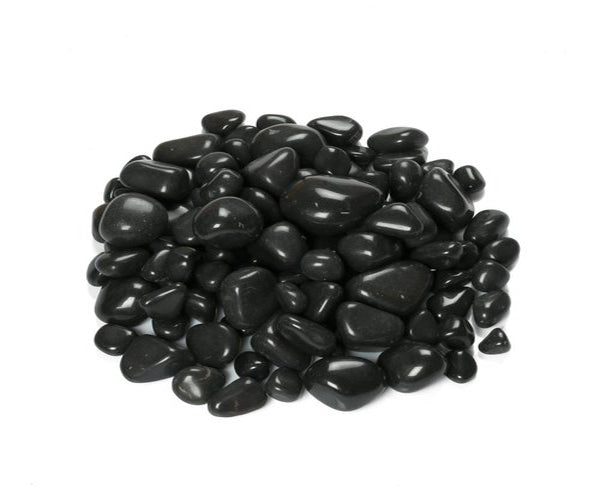
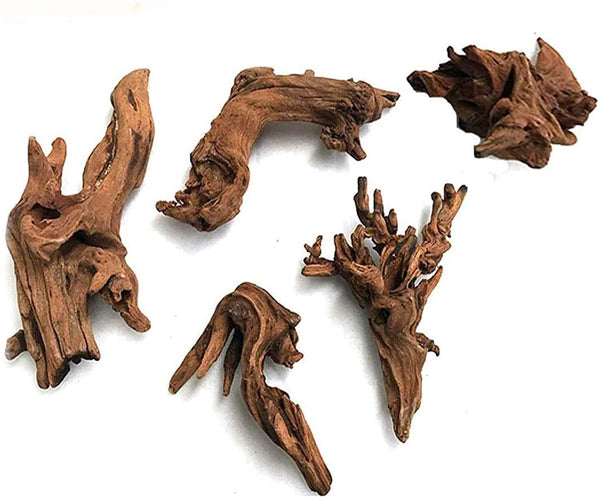
Care & Maintenance
An inert, low-maintenance decor choice, though its bright colour means dirt shows more readily than on dark substrate.
- Before use: rinse thoroughly until the water runs fully clear -- white stone shows residual dust more than dark stone
- Maintenance: gravel-vacuum regularly during water changes; waste and debris are more visually obvious against a light substrate, which is actually a practical benefit for spotting a tank that needs attention
- Chemical stability: inert and non-reactive under normal conditions
- Algae/staining: light substrate can show green or brown algae film and organic staining more visibly over time; manageable with routine cleaning and algae-eating tankmates
- Longevity: doesn't degrade, effectively a permanent, one-time addition
- Fish safety: smooth, rounded finish is safe for barbel-sensitive bottom-dwellers like corydoras and loaches
- Reuse: can be rinsed and reused elsewhere if a tank layout is ever changed
- CO2/planted setups: chemically inert (not calcium-carbonate-based), so it doesn't interfere with pressurised CO2 injection or liquid fertiliser dosing the way marble/coral-based white stone would
- Deep-cleaning: a full tank strip-down can be followed by a brief boil or a dilute bleach soak (thoroughly rinsed and dechlorinated after) to fully sanitise the stones before reuse
- Placement care: add water before pouring the stones onto bare glass, or pour onto a plate resting on the tank floor, to avoid scratching the glass with the weight of a dry pour
- Equipment compatibility: works normally around filters, heaters, and root-tab fertiliser insertion the same as any inert gravel substrate
- Visual maintenance tip: because dirt and algae show up faster on white than on dark substrate, some keepers use it specifically as an early-warning indicator that a water change or gravel-vac is due
- Blending batches: if topping up an existing bed with a newly purchased batch, a light rinse-and-mix of old and new stones together helps even out any subtle shade variation between production runs