About This Combo
This combo is a multi-unit pack of Black Widow Tetras (Gymnocorymbus ternetzi), sometimes also called skirt tetras for their flowing, dark, triangular dorsal and anal fins. They come originally from slow-moving, densely vegetated rivers and streams in Brazil, Bolivia, and Paraguay, where they live in loose to tight shoals in shaded, tannin-tinted water.
Young Black Widow Tetras have quite intense black colouration on the rear half of the body and fins, which is part of what makes the species popular; that black tends to fade somewhat to a softer grey as the fish matures, which is a normal part of their life cycle rather than a sign of poor health. A pale, silvery-gold strain and even a longer-finned "veil" strain are also sometimes sold under similar names, so buyers may notice some visual variation between individual specimens.
Being sold as a multi-pack fits how the species should actually be kept -- like most tetras, Black Widows are shoaling fish and become visibly more confident, colourful, and settled in a proper group of six or more, versus skittish and stressed in ones or twos.
Black Widow Tetras are also a genuinely durable, well-established aquarium fish, with a long history in the hobby dating back decades -- part of why they remain a reliable, widely-available choice rather than a passing trend species.
Requirements
A shoal from this combo does well in a tank of 60cm/55+ litres upward, with the group kept together rather than split up -- shoal size and stability directly affects how relaxed and well-coloured the fish look day to day. They're not fussy eaters, taking flake, small pellets, and occasional live or frozen food (bloodworm, daphnia) readily.
Black Widow Tetras have a bit of a reputation for gentle fin-nipping, particularly toward slower, long-finned tankmates (like fancy bettas or long-finned guppies) if kept in too small a group or an under-stocked tank -- keeping a full shoal of six or more actually reduces this behaviour significantly, since it spreads their social energy across the group rather than toward other tankmates.
Soft, subdued lighting and some floating plants or driftwood echo their natural shaded, tannin-stained habitat and tend to bring out their best colour, though they adapt fine to a standard well-lit community tank too.
They're an active, mid-water swimming species, so leave open swimming room alongside any planted or wood-decorated areas -- a tank that's entirely dense cover with no open water limits the natural shoaling behaviour that makes this species interesting to watch.
Because this is a multi-unit pack, plan the tank around the whole group from day one rather than starting with a couple of fish and adding more later -- introducing the full shoal together settles the pecking order faster and avoids the extra stress (and fin-nipping risk toward existing tankmates) that comes from repeatedly adding small numbers of new fish to an already-established group.
Compatibility
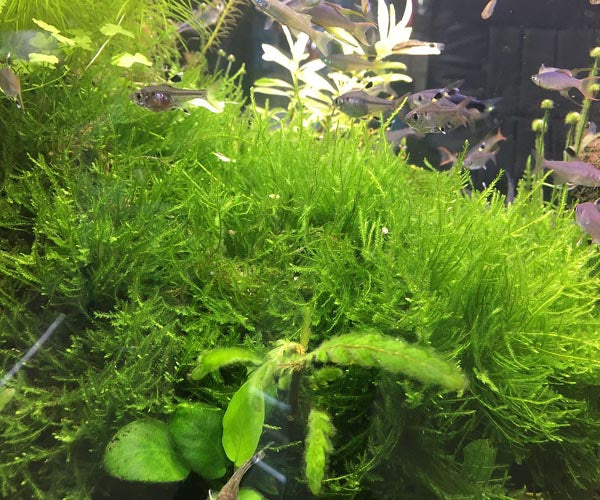
Water & Care Conditions
An easygoing, adaptable South American tetra with fairly wide real-world tolerance.
- pH: 6.0-7.5, slightly soft and acidic to neutral water mirrors their natural habitat best
- Hardness: soft to moderately hard water
- Temperature: 22-28°C
- Oxygenation: standard filtration and surface movement is sufficient; no special aeration needs
- Shoal size: six or more is genuinely important for this species -- both for visible colour/confidence and to reduce fin-nipping tendencies toward tankmates
- Colour change: the intense black colouration of young fish softening to grey with age is normal, not a health issue
- Feeding: not fussy -- flake, small pellets, and occasional live/frozen food (bloodworm, daphnia) are all readily accepted
- Acclimation: drip-acclimate or float-and-mix gradually rather than a quick dump when adding the shoal, since a group of new arrivals settles noticeably faster (less hiding, feeding sooner) when the water-parameter shift is gentle rather than abrupt
- Water changes: a fairly standard 20-30% weekly change suits this species well; they're tolerant of normal parameter drift but do best with consistency rather than large, infrequent swings
- Lifespan: commonly 3-5 years in a well-kept community tank, sometimes longer, which is worth factoring in as a multi-year commitment rather than a short-term addition
- Breeding: an easy egg-scatterer if you want to try -- a separate spawning tank with fine-leaved plants or a mesh grid to protect the eggs from the adults (who will eat them) is the usual approach, though most keepers simply enjoy the shoal without breeding them deliberately