Otocinclus Tank Mates: Best and Worst Fish for Otos
Published: 2026-11-01 · FishyKart Blog
Choosing otocinclus tank mates comes down to one fact: an oto is a 1.5-2 inch (4-5 cm) grazer that never fights back and needs time to find food. The best companions are small, calm fish that like the same 72-79°F (22-26°C) water, such as small tetras, rasboras, pygmy corydoras and dwarf shrimp. The worst are big fish that see otos as food and large algae eaters that clear the glass before the otos get a turn.
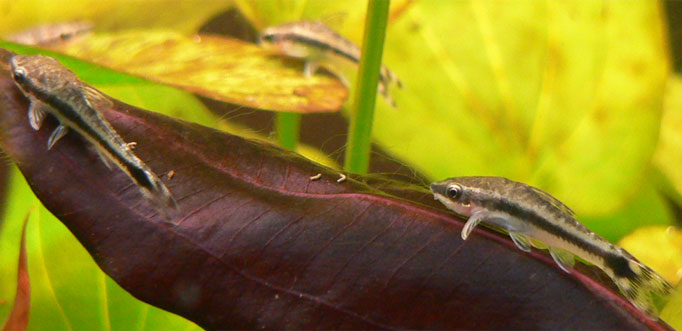
Photo: Chle - Wikimedia Commons, CC BY-SA 3.0
What Makes a Good Oto Tank Mate
SeriouslyFish describes otos as peaceful with other species but not ideal community fish, because they are small and timid. Its suggested companions are "diminutive, non-aggressive characids, smaller callichthyid or loricariid catfishes, and perhaps freshwater shrimp". In practice a good tank mate passes four checks:
- Size: small enough that it cannot swallow or chase a 1.5 inch fish.
- Temperament: calm swimmers that leave grazing fish alone.
- Food: does not compete for algae and sinking wafers, or is easy to feed around.
- Water: comfortable at 72-79°F and pH 6.5-7.5, the range covered in the otocinclus water parameters guide.
Best Otocinclus Tank Mates
| Tank mate | Why it works | Watch for |
|---|---|---|
| Neon tetras, ember tetras | Small midwater shoalers, same soft water | Nothing major |
| Harlequin and chili rasboras | Peaceful, stay up in the water column | Chilis need a mature, gentle tank too |
| Pygmy and panda corydoras | Small bottom fish, no algae competition | Share sinking food fairly |
| Cherry and amano shrimp | Otos ignore shrimp and shrimplets | Amanos also eat algae wafers |
| Endlers and guppies | Peaceful surface and midwater fish | Guppies prefer slightly harder water |
| Honey gourami | Calm centerpiece fish for 20 gallons | Keep one gourami species |
| Kuhli loaches | Shy bottom dwellers, never bother otos | Need soft sand |
A betta is a common question. Most bettas ignore otos, which move fast and stick to glass and leaves. The limit is temperature: bettas want about 78-80°F, which is the warm edge for otos, so give the tank gentle surface movement for oxygen.
Fish to Avoid With Otocinclus
- Medium and large cichlids: oscars, green terrors, convicts and similar fish will hunt or harass otos.
- Goldfish: coldwater fish at about 65-72°F, below the oto range, and they produce a lot of waste. See what fish can live with goldfish instead.
- Big algae eaters: a common pleco or an adult Siamese algae eater will out-eat otos at every wafer. A single bristlenose pleco can work in a bigger tank if you feed more than one spot.
- Fast, pushy fish: tiger barbs and large danio groups do not attack otos, but they grab food first and keep a nervous oto hiding.
- Discus: they need 82-86°F, too warm for otos long term.
Stocking a Community Tank With Otos
SeriouslyFish recommends keeping otos in a group of 6 or more and gives a base of about 18 x 12 inches (45 x 30 cm) for a small species. With tank mates, plan more room: a 20 gallon tank holds 6 otos plus a school of small tetras comfortably. For exact numbers per tank size, see how many otocinclus per gallon.
Order matters too. Add the otos last, once the tank has run for a few months and has soft algae and biofilm. In a busy tank, drop an algae wafer or blanched zucchini after lights out so the otos eat before faster fish notice. If an oto's belly looks hollow from below, it is losing the food race; see what to feed otocinclus and how long otos live.
Sample Oto Communities
- 10 gallon planted: 6 otos, 6-8 chili rasboras or embers, cherry shrimp.
- 20 gallon long: 6 otos, 10 neon tetras, 6 pygmy corydoras, one honey gourami.
- Betta tank, 10 gallons or more: one betta, 6 otos, amano shrimp, plenty of plants.
These are starting points, not fixed rules. Watch the otos for the first two weeks: active grazing in the open and round bellies mean the mix is working.
Sources: SeriouslyFish profile for Otocinclus cocama (temperament, tank mates, group size, tank base); FishBase species summary for Otocinclus vittatus.
View Otocinclus → Browse Live Fish →