About & Origin
The zebra danio (Danio rerio) is a small, hardy minnow native to fast-flowing streams, rice paddies, and floodplains across the eastern Himalayan region of India, Bangladesh, Nepal, and Myanmar. In the wild it wears the plain silver-and-blue horizontal stripes that give it its name -- an active, torpedo-shaped shoaling fish built for open water.
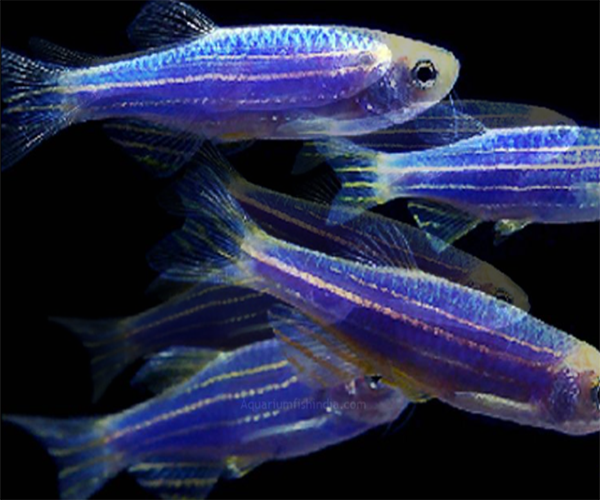
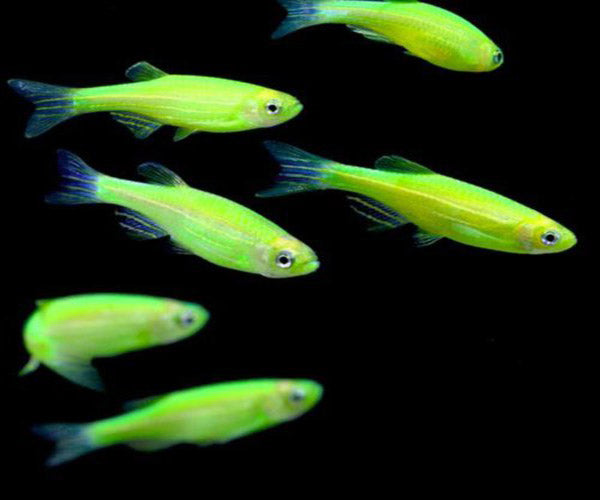
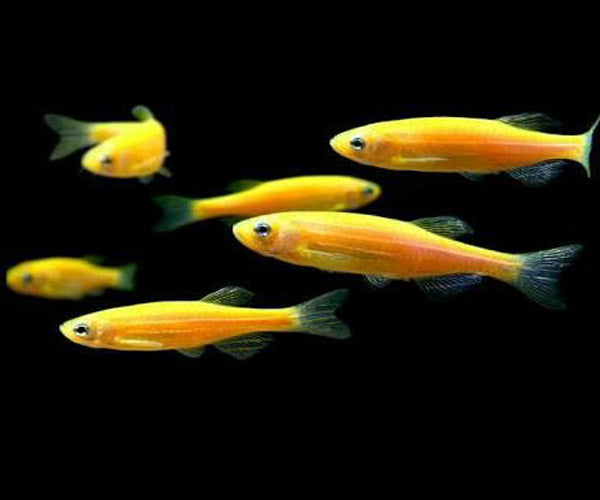
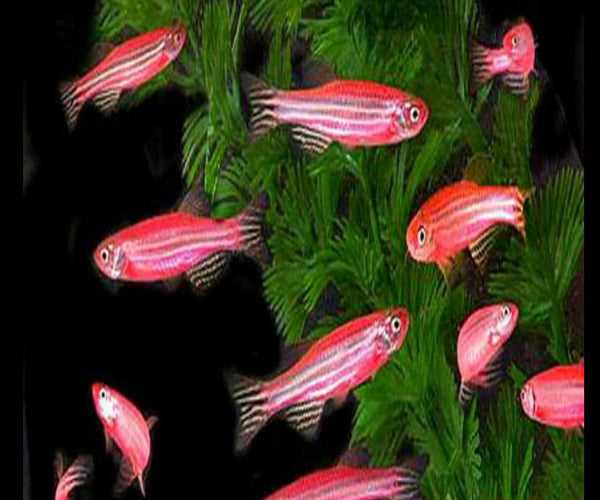
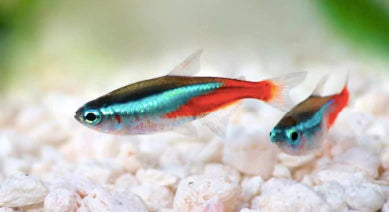
The bright, saturated color on this particular fish is not a natural wild pattern. It is a colour-enhanced strain of zebra danio, produced either through the well-known GloFish genetic-modification programme (which inserts a fluorescent protein gene, first developed from jellyfish/coral genes, giving a permanent, breed-true colour) or, in some markets, through dye injection of ordinary danios -- a much more controversial practice that fades over the fish's life and does not pass to offspring. fishykart.com's stock is a bred colour strain, not a dyed fish.
Underneath the colour, it behaves exactly like a standard zebra danio: fast, constantly on the move, and happiest in a group of its own kind darting around the upper and middle water column.
Danio rerio is one of the most scientifically important fish in the world -- an enormous amount of vertebrate developmental biology and genetics research is done on plain zebra danios because their embryos are transparent and develop outside the mother, making them easy to observe under a microscope. The GloFish strain sold in the aquarium trade is a direct commercial spin-off of that same fluorescent-protein research, first popularised in the early 2000s as the first genetically modified pet sold to the public.
Wild zebra danios shoal in large, loose groups in shallow, fast-moving water over gravel or sand, feeding on insects, worms, and other small invertebrates that wash past in the current, along with algae and plant matter. That fast-water background is exactly why the aquarium fish is such an energetic, constantly-moving swimmer even in the stillest home tank.
Requirements
Standard zebra danio care applies to the blue strain: shoal of 6 or more (a lone or thin group becomes stressed and hides, and spreads any fin-nipping onto whichever tankmate is nearest), a 60cm-plus tank, and -- non-negotiable for this species -- a genuinely tight-fitting lid. Zebra danios are notorious jumpers, especially when startled, and a small cable-cut gap in a hood is often all it takes for one to end up on the floor.
Diet is easy: quality flake or micro-pellet as a staple, occasional live/frozen brine shrimp or daphnia for conditioning and colour. They're prolific egg-scatterers over fine-leaved plants or a marble substrate, and adults will happily eat their own eggs and fry if not separated -- not a species that needs any encouragement to breed, just protection for the eggs if you want to raise the fry on purpose rather than let them be consumed.
Activity level: zebra danios are fast, constant swimmers that need real open swimming space -- a tank that's mostly decor with little clear water will leave this active strain visibly frustrated and more prone to fin-nipping out of restlessness than a comparably-sized fish with plenty of room to swim properly and burn off energy.
Compatibility
Water & Care Conditions
Same broad tolerance as any zebra danio, blue included: pH 6.5-7.5, hardness 5-19 dGH, true comfort zone 18-24°C (tolerates a warmer 26°C+ tropical community tank but does less well kept permanently hot), and appreciates good water movement consistent with its fast-stream origin.
Blue is one of the cooler-toned GloFish strains, and tends to look most striking under a blue-leaning or actinic-shifted light spectrum rather than the warm, diffused lighting that flatters yellow or pink strains -- worth factoring in if you're picking tank lighting specifically to show the colour off. Regardless of light choice, nitrate build-up dulls the fluorescent tone over time, so a consistent weekly partial water change matters as much for colour as for basic water quality.
Their genuinely wide temperature tolerance is a real, practical advantage: a stable unheated room-temperature tank suits them as well as a heated tropical community, which isn't true of most commonly-kept aquarium fish.
A properly cycled filter and weekly water changes keep this active, fast-metabolism fish in good condition -- their high activity level means a correspondingly higher appetite and bioload than a similarly-sized slow-moving fish, worth factoring into stocking and feeding plans when sharing a tank with slower, less active tankmates.